
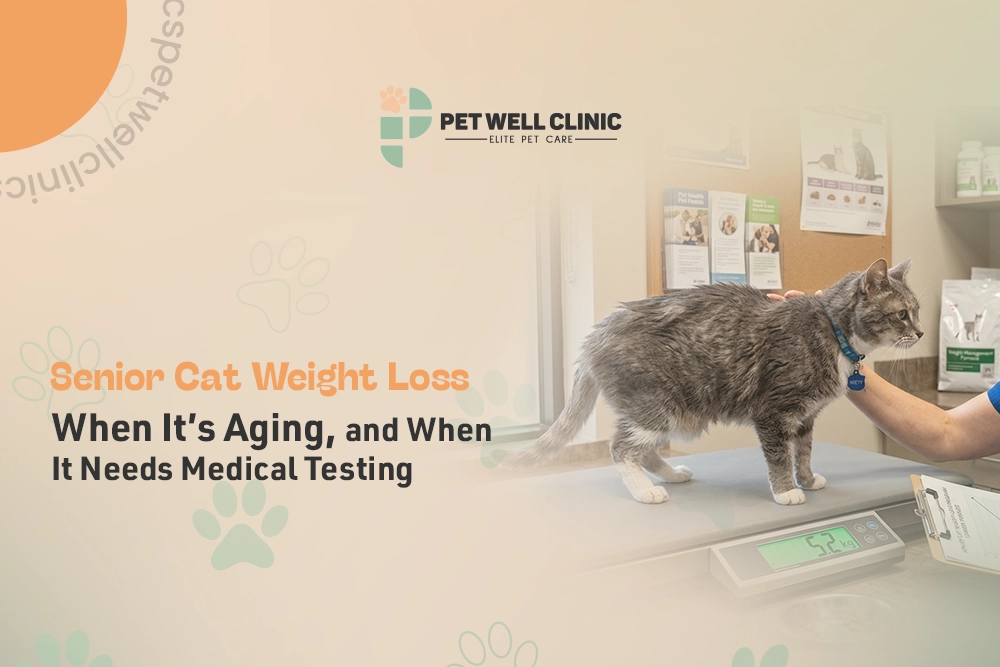
Senior cat weight loss in abu dhabi is often overlooked as a normal part of aging, especially when changes happen gradually over time. However, unexplained weight loss in older cats can sometimes indicate underlying health conditions that require medical attention. In Abu Dhabi, recognizing early signs and knowing when to seek evaluation can help prevent complications and support better long-term health outcomes for your cat.
Senior cat weight loss – Why it is often missed in older cats
Recognizing senior cat weight loss can be challenging, especially when changes happen gradually:
- Cats lose muscle mass slowly over time
- Thick fur can hide body condition changes
- Appetite may fluctuate without obvious concern
- Activity levels naturally decrease with age
This is why many cases of old cat losing weight go unnoticed until more visible symptoms appear.
Normal aging vs medical causes
Not all senior cat weight loss is harmless. It is important to separate normal aging from medical concerns:
Possible age-related changes:
- Mild reduction in muscle tone
- Slight appetite variation
- Reduced activity
Potential medical causes
- Thyroid disease in cats leading to weight loss despite eating
- Chronic kidney conditions with gradual decline
- Digestive disorders affecting nutrient absorption
Distinguishing between these requires proper evaluation.
Signs that indicate testing may be needed
Certain symptoms alongside senior cat weight loss suggest that further investigation is necessary:
- Persistent senior cat appetite loss
- Increased thirst or urination
- Vomiting or changes in stool
- Noticeable weakness or lethargy
These signs may indicate conditions like kidney disease cat symptoms or hormonal imbalance.
What to monitor at home
Tracking senior cat weight loss at home helps provide useful information:
- Weekly weight measurements if possible
- Changes in appetite or feeding habits
- Water intake and litter box activity
- Behavioral changes or reduced interaction
Consistent observation helps identify patterns early.
How clinics investigate ongoing weight loss
Evaluating senior cat weight loss typically involves a structured approach:
- Full physical examination
- Cat blood test to assess organ function
- Imaging if internal issues are suspected
- Review of medical history and lifestyle
These steps help identify the root cause accurately and guide management.
When to book a senior wellness visit
You should not delay evaluation of senior cat weight loss when:
- Weight loss continues over several weeks
- Appetite changes persist
- Additional symptoms appear
- You are unsure whether changes are normal
Early visits allow for better outcomes and simpler interventions.
Why Pet Well Clinic is a trusted choice for senior cat care
When dealing with senior cat weight loss, the quality of assessment and follow-up is critical. At Pet Well Clinic, senior care is approached with a structured and diagnostic-focused mindset.
- Detailed evaluation tailored for aging pets
- Access to lab testing and diagnostic tools
- Monitoring plans for chronic conditions
- Integration between examination, testing, and follow-up
- Calm handling designed for senior pets
This ensures that subtle changes are not overlooked and are addressed early. (Watch this video)
📍 Address:
Al Dana Tower – Street 31 – Al Sa’adah – Zone 1 – Abu Dhabi – United Arab Emirates
📞 Call Us 24/7:
FAQ’S
How much weight loss is considered concerning in senior cats?
A loss of more than 5–10% of body weight over a short period should be evaluated.
Can a cat lose weight while still eating normally?
Yes, conditions like thyroid disease can cause weight loss despite a good appetite.
What tests are usually needed for diagnosis?
Blood tests, urine analysis, and sometimes imaging are commonly recommended.
Is weight loss always linked to serious disease?
Not always, but it should always be assessed to rule out underlying issues.
Conclusion
Understanding senior cat weight loss in abu dhabi is essential for distinguishing between normal aging and potential health concerns. Early monitoring, proper testing, and consistent follow-up can make a significant difference in your cat’s quality of life.