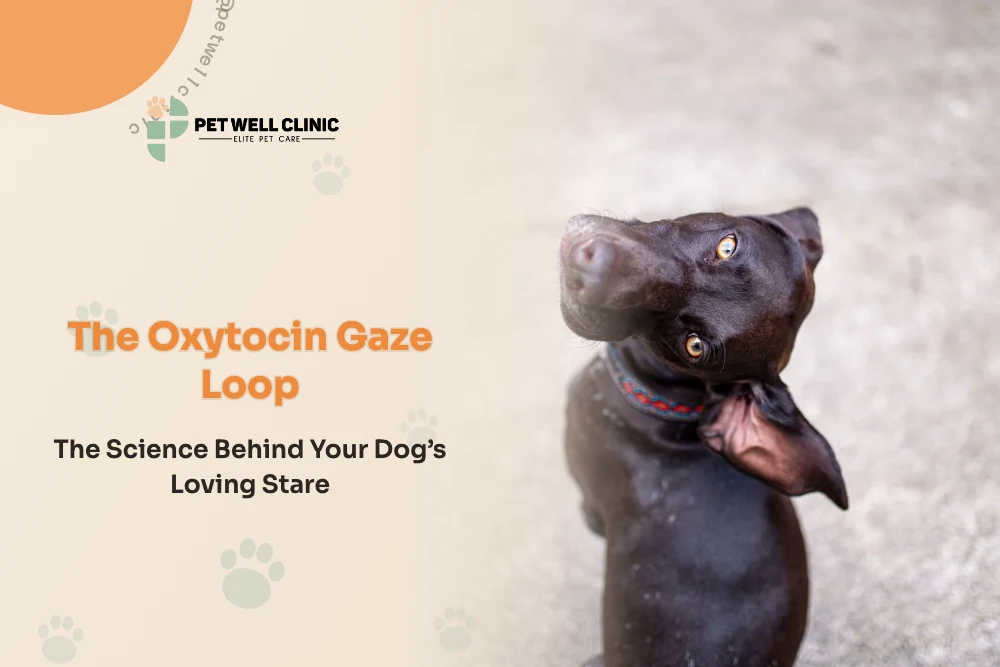
You are on the sofa and you feel it: your dog is watching you, calm and steady. Many owners wonder what that look means. Science offers a heart-warming answer.
What researchers found
Studies of dogs and their owners have reported that friendly mutual gaze is linked with a rise in oxytocin, a hormone involved in social bonding, in both the dog and the person. Researchers describe this as a feedback loop: looking at each other strengthens the bond, which makes each more likely to seek that contact again. Similar bonding mechanisms exist between parents and babies.
Why dogs, and not wolves?
Comparable studies with hand-raised wolves did not find the same effect, which supports the idea that dogs developed this human-friendly behaviour during domestication. Dogs are unusually good at reading human faces and following where we look.
Not every stare is the same
- Soft, relaxed gaze with loose body and blinking: affection and connection
- Hard, fixed stare with a stiff body: discomfort or a warning, especially towards strangers or other dogs
- Looking at you, then at the cupboard: communication, often about food
Never force eye contact with a dog you do not know. Many dogs find direct staring threatening.
Building the bond
Gentle eye contact during calm moments, reward-based training and shared routines all strengthen your relationship. If your dog suddenly avoids contact, hides or seems withdrawn, it can be a sign of pain or stress worth checking with your vet.
Behaviour changes are often health changes. Learn about our behaviour care.