A dog’s nose is one of the most sophisticated sensing tools in the animal world. Understanding how it works helps you enrich your dog’s daily life, and a change in how your dog uses it can be an early clue that something is wrong.
How a dog’s nose works
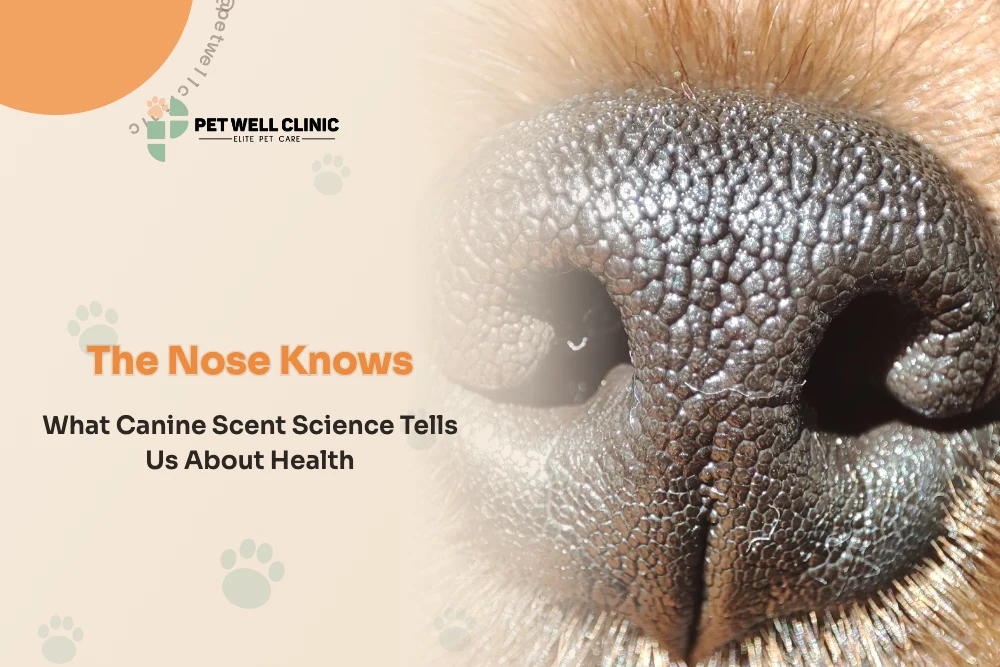
Dogs have many times more scent receptors than people, and a much larger part of their brain is devoted to analysing smells. When a dog sniffs, air is split into two paths: one for breathing and one that travels to a dedicated olfactory area. The slits on the side of the nose let air out without disturbing the scent coming in, so a dog can keep sampling continuously.
Dogs also have a second scent organ in the roof of the mouth, often called the vomeronasal organ, which picks up chemical signals from other animals.
What dogs can detect
Trained detection dogs are used around the world to find people, explosives and agricultural products at airports. Research groups have also studied dogs trained to detect certain diseases from scent samples. The results are promising in some areas and still being studied in others, so a dog’s nose is not a replacement for veterinary or medical testing, but it shows just how much information a smell can carry.
Why sniffing matters for your dog
For dogs, sniffing is not a distraction from the walk. It is the walk. A slow, sniff-led walk can tire a dog mentally as much as a longer, faster one, which is especially useful during Abu Dhabi’s hot months when long walks are not safe.
- Let your dog lead part of each walk at their own pace
- Hide treats around the house or in a snuffle mat
- Try simple scent games: find a toy under one of three cups
When a change in sniffing is a health clue
A dog that suddenly loses interest in sniffing, food or treats may be unwell. Nasal discharge, sneezing, nosebleeds or noisy breathing also deserve a check. In older dogs, reduced interest in scent can accompany dental pain, nasal disease or cognitive changes.
If your dog’s appetite or interest in smells changes for more than a day or two, book a consultation so we can find out why.
The takeaway
Your dog’s nose is how they read the world. Giving them time to use it improves their wellbeing, and noticing when that changes helps you catch problems early.