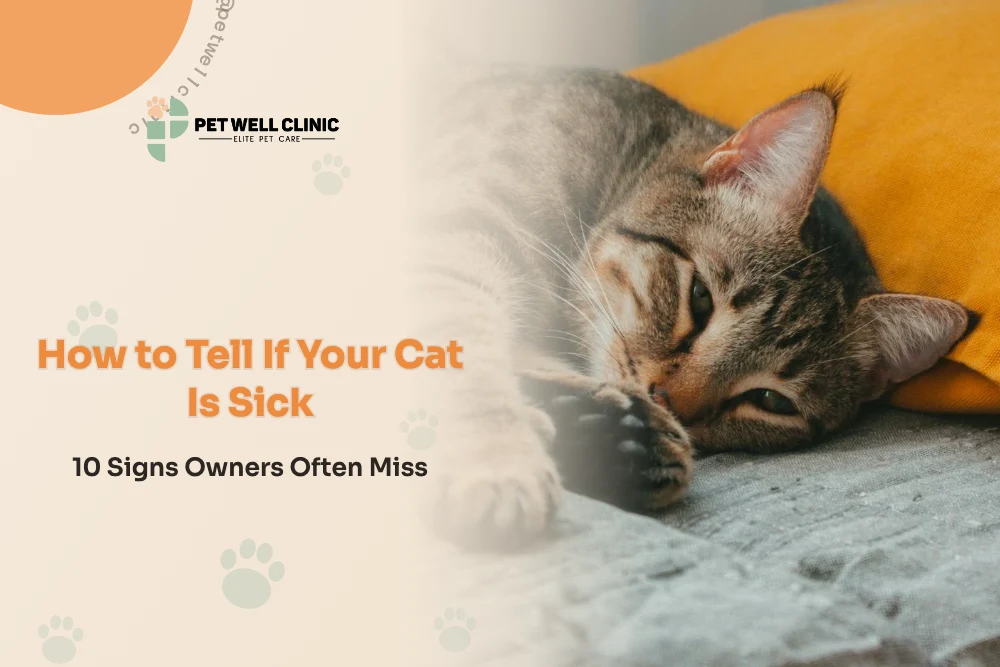
Cats rarely make a fuss when they feel unwell. By the time a cat looks obviously ill, the problem has often been building for some time. Knowing the quieter signs helps you act sooner.
10 signs worth noticing
- Drinking more water. Often linked to kidney disease, diabetes or thyroid problems in older cats.
- Changes in the litter tray. Larger or smaller clumps, going more often, straining or going outside the tray.
- Weight loss despite a good appetite. A classic sign of an overactive thyroid or diabetes.
- Eating less or being picky. Cats should not go without food; even a day or two can be harmful.
- Hiding more. Withdrawal is one of the most common signs of pain or illness.
- Less grooming, or over-grooming. A scruffy coat or bald patches both deserve a check.
- Bad breath or dropping food. Often dental disease, which is painful and common in cats.
- Squinting, a hunched posture or sitting tucked up. These can be signs of pain.
- Not jumping up as before. Often arthritis, which is very common in older cats.
- Vomiting more than occasionally. Regular vomiting is not normal, even with hairballs.
Signs that need urgent attention
Call us straight away if your cat is breathing with an open mouth, straining in the litter tray without passing urine (especially male cats), has collapsed, or has not eaten for more than 24 hours.
Why routine checks matter for cats
Because cats hide illness so well, a yearly check, or six-monthly for cats over seven, is one of the best ways to find problems early. Screening blood and urine tests can reveal changes long before signs appear.
Worried about your cat? Book a consultation or message us on WhatsApp.