
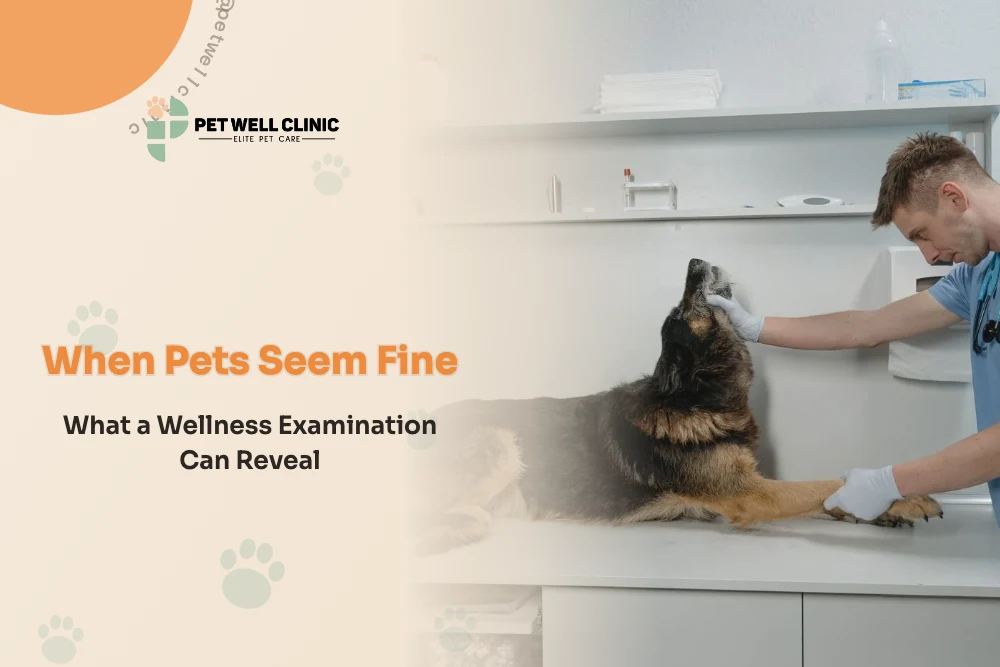
“But he seems completely fine.” It is one of the most common things we hear, and usually it is true. Yet every week our vets find problems during routine checks that owners had no way of noticing.
Why pets hide illness
Dogs and especially cats are wired to mask weakness. In the wild, showing pain or illness makes an animal vulnerable, so many pets carry on eating, playing and greeting you at the door while a problem quietly develops.
What we often find in “healthy” pets
- Dental disease: tartar, gum infection and painful teeth hidden at the back of the mouth
- Heart murmurs: abnormal heart sounds that can be the first sign of heart disease
- Weight change: gradual gain or loss that is hard to notice when you see your pet every day
- Lumps: small masses under the skin that need checking
- Early kidney or thyroid changes: picked up on screening blood tests in older pets
- Ear and skin problems: low-grade infections and allergies
The value of a baseline
A wellness examination is not just about today. Each visit records your pet’s weight, body condition, heart rate and, where appropriate, blood results. Over time those records let us see a trend, such as kidney values creeping up year by year, long before your pet feels unwell.
How often should pets be checked?
We recommend a full wellness examination once a year for adult dogs and cats, and every six months from around seven years old, because pets age faster than we do and changes can progress quickly.
What happens at a wellness visit
We ask about appetite, thirst, toileting, energy and behaviour, then examine your pet from nose to tail. We review vaccinations, parasite prevention and diet, and recommend tests only where they add value. You leave with a written summary and a plan.
Is your pet due a check? Read about our wellness checks or book online.