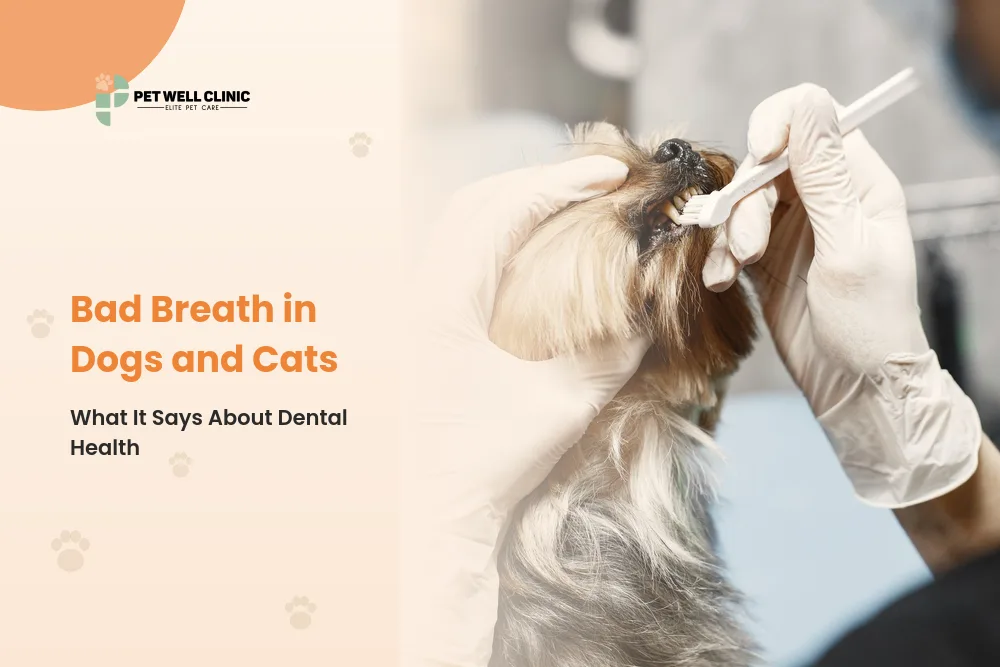
Many owners think bad breath is just part of having a pet. It is not. Persistent bad breath is one of the earliest signs of dental disease, which affects most dogs and cats by middle age. Left untreated, it causes pain, tooth loss and infection that can affect the rest of the body.
What causes bad breath?
- Plaque and tartar: bacteria build up on teeth and harden into tartar, especially along the gum line.
- Gum disease (periodontal disease): inflamed gums pull away from teeth, creating pockets where bacteria thrive.
- Broken or infected teeth: fractured teeth can expose the nerve and become abscessed.
- Tooth resorption in cats: a painful condition where the tooth structure breaks down.
- Other causes: mouth ulcers, foreign objects stuck in the mouth, or less often kidney disease or diabetes, which can change how the breath smells.
Signs of dental disease
- Bad breath that does not go away
- Yellow or brown tartar on the teeth
- Red, swollen or bleeding gums
- Dropping food, chewing on one side, or reluctance to eat hard food
- Pawing at the mouth or drooling
- Swelling under the eye (a sign of a tooth root abscess)
Pets rarely stop eating because of dental pain. They adapt, so owners often do not realise how sore their pet was until after treatment.
Why it matters
Dental disease is painful. Bacteria from infected gums can also enter the bloodstream and are linked with problems in the heart, liver and kidneys. Treating dental disease early is easier, cheaper and kinder than waiting.
What a professional dental cleaning involves
- Pre-anaesthetic check and blood tests
- General anaesthesia with monitoring, so every tooth can be cleaned safely, including below the gum line
- Full mouth examination and charting of each tooth
- Dental X-rays to see roots and hidden problems. See pet X-rays
- Scaling and polishing to remove plaque and tartar and smooth the surface
- Treatment of diseased teeth, such as extractions, with pain relief
Anaesthesia-free cleaning only removes visible tartar and cannot treat disease under the gums, so it is not recommended. Read more in signs your dog needs a dental cleaning.
Home care that works
- Brushing with a pet toothpaste is the most effective home care. Start slowly and aim for daily.
- Dental diets and chews with proven effect can help, but are not a replacement for brushing.
- Avoid hard chews such as bones, antlers and hard nylon toys, which can fracture teeth.
- Never use human toothpaste, as some contain ingredients toxic to pets.
How often should teeth be checked?
Every pet should have their teeth checked at each wellness visit. Small breeds, flat-faced breeds and cats often need professional cleaning more often than large dogs.
Dental care at Pet Well Clinic
Our dental service includes examination, anaesthetic with monitoring, dental X-rays, scaling, polishing and extractions when needed, plus a home-care plan. We are in Al Dana Tower, Al Sa’adah, Abu Dhabi.
Noticed bad breath? Book a dental check, call +971 50 104 8443, or message us on WhatsApp.