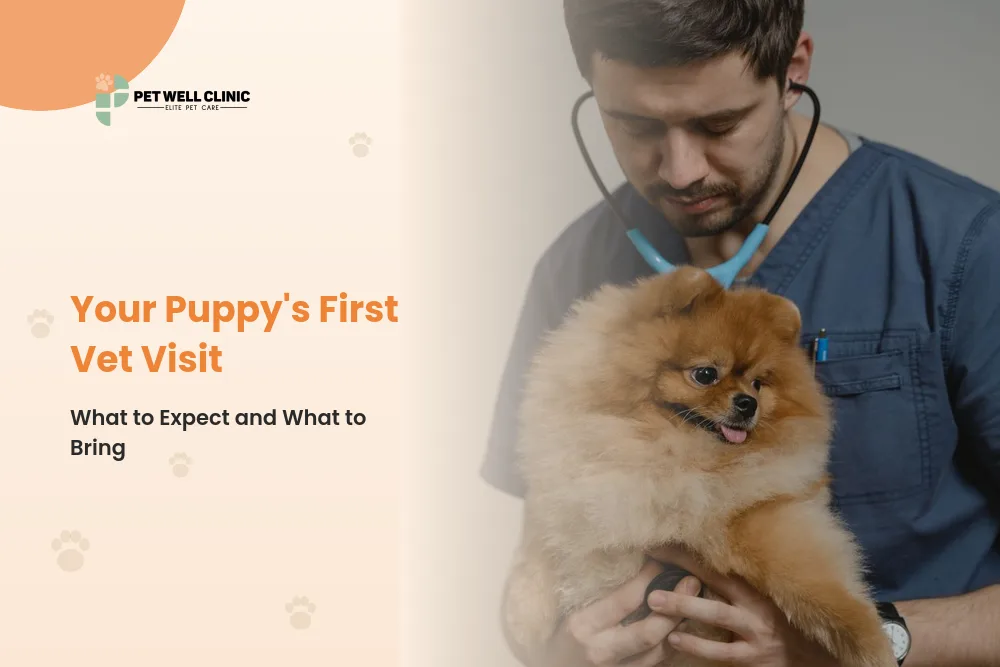
Bringing a new puppy home is exciting, and one of the first things to arrange is a vet visit. Ideally, book it within the first few days. The first appointment checks that your puppy is healthy, starts or continues the vaccine course, sets up parasite control, and gives you a chance to ask all the questions new owners have. It is also your puppy’s first impression of the clinic, so a calm, positive visit makes every future appointment easier.
When to book the first visit
Most puppies go to their new homes at around eight weeks old. Book a check within the first week, even if the breeder or shelter says the puppy has already been vaccinated. This lets us confirm what has been given, catch any health problems early, and plan the next steps. If your puppy is lethargic, not eating, vomiting or has diarrhoea, do not wait: call us the same day, as young puppies can become dehydrated quickly.
What to bring
- Any paperwork from the breeder, shelter or previous owner, especially vaccine cards, deworming records and microchip details. Imported puppies should also have their import documents.
- A fresh stool sample if possible, collected the same day, so we can check for intestinal parasites.
- A list of questions about food, toilet training, chewing, sleep or behavior.
- Details of current food, including brand and how much your puppy eats.
- Treats your puppy likes, a lead and collar or harness, and a small towel or blanket.
Our vet visit checklist is a handy reference for later visits too.
What happens during the visit
A full nose-to-tail examination
We check your puppy’s weight, temperature, heart and lungs, eyes, ears, mouth and teeth, skin and coat, abdomen, joints and, for males, whether both testicles have descended. We look for signs of common puppy problems such as ear mites, skin infections, hernias, heart murmurs and parasites.
Vaccinations
Puppies need a course of core vaccines in their first months, usually given every three to four weeks until around 16 weeks of age, followed by a booster later. Core vaccines protect against serious diseases such as parvovirus, distemper and infectious hepatitis. Rabies vaccination is also needed and is required for registering your dog in Abu Dhabi. We will build a schedule that fits your puppy’s age and any vaccines already given. Read more in our guide to puppy vaccinations and the dog vaccination schedule, or see our vaccinations service.
Parasite control
Puppies are often born with or quickly pick up intestinal worms, so regular deworming is important in the first months. We will also recommend flea and tick protection and discuss heartworm prevention, which matters in the UAE because mosquitoes are around for much of the year.
Microchip and registration
If your puppy is not microchipped yet, we can do it during a visit. It is quick and similar to a vaccine injection. A microchip is needed for registration with the authorities in Abu Dhabi and for travel. Our article on pet microchipping in Abu Dhabi and the guide to TAMM registration explain the process.
Nutrition and growth
Puppies need a diet made for growth, and large breeds need a food designed for large-breed puppies to support healthy joint development. We will check your puppy’s body condition, advise how much and how often to feed, and help you plan any change of food gradually. If you would like more detailed advice, ask about our nutrition care.
Making the first visit a good experience
- Practise gentle handling at home: touch your puppy’s paws, ears and mouth, and reward calm behavior.
- Carry small puppies or keep them in a carrier until their vaccine course is complete, and avoid letting them sniff the floor near other dogs.
- Bring treats so the team can reward your puppy during the exam.
- Stay relaxed yourself. Puppies pick up on their owner’s mood.
Some owners also bring puppies in for short, happy visits with no procedures at all, just a treat and a fuss from the team. These help your puppy learn that the clinic is a friendly place. Our behavior care team can advise on socialisation, chewing, toilet training and early training.
Questions worth asking
- When is the next vaccine due, and when can my puppy safely go outside and meet other dogs?
- Which flea, tick, worm and heartworm products should we use, and how often?
- How much should my puppy weigh, and how much should I feed?
- When should we think about spaying or neutering?
- Should I consider pet insurance?
- What signs mean I should call the clinic straight away?
Signs to call us about
Young puppies can become unwell quickly. Contact us if your puppy has vomiting or diarrhoea (especially with blood), refuses food, seems unusually tired, has a swollen belly, coughs, or has discharge from the eyes or nose. These can be early signs of serious infections such as parvovirus, which needs urgent treatment.
Book your puppy’s first visit
Pet Well Clinic is in Al Dana Tower, Al Sa’adah, Abu Dhabi. We offer puppy checks, vaccinations, deworming, microchipping and wellness checks throughout your dog’s life.
New puppy at home? Book a first visit online, call +971 50 104 8443, or send us a WhatsApp message.