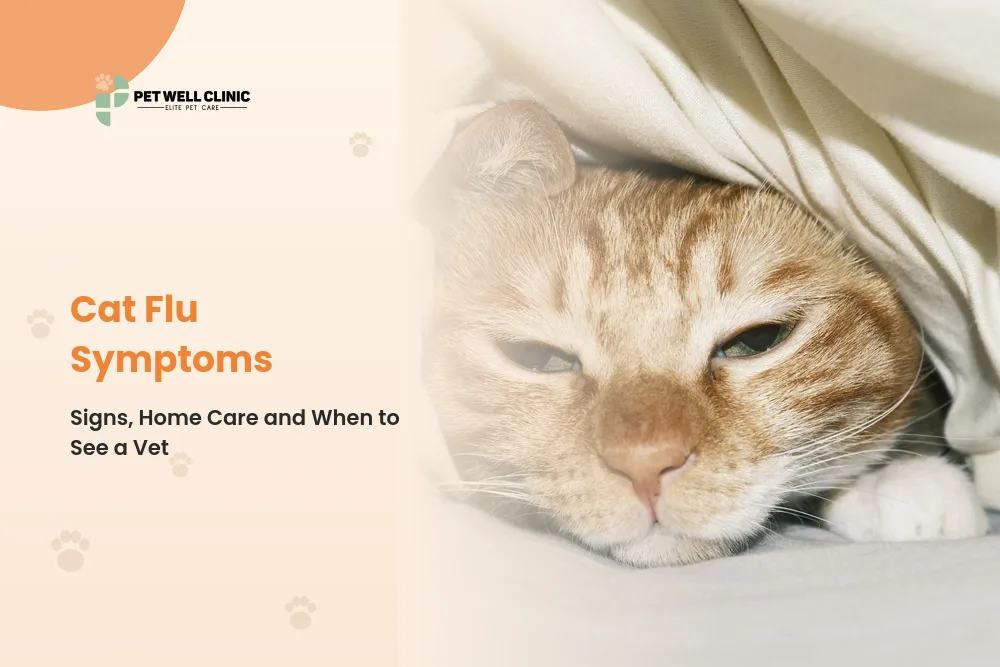
“Cat flu” is the everyday name for an upper respiratory infection in cats. It is one of the most common reasons cats are brought to the vet, especially kittens, cats from shelters or multi-cat homes, and cats that have recently been boarded or travelled. Most cats recover well with the right care, but some become seriously unwell, so it helps to know what to watch for.
What causes cat flu?
Despite the name, cat flu is not caused by the human influenza virus, and it cannot be passed between cats and people. Most cases are caused by two viruses:
- Feline herpesvirus (FHV-1), which tends to cause sneezing, eye problems and more severe signs.
- Feline calicivirus (FCV), which often causes mouth ulcers, drooling and sometimes lameness.
Bacteria such as Chlamydia felis and Bordetella can also be involved, and secondary bacterial infections are common once the nose and eyes are inflamed. The infection spreads through direct contact, sneezing, shared bowls and bedding, and on owners’ hands and clothes.
Common cat flu symptoms
- Sneezing
- Runny nose, starting clear and sometimes turning thick, yellow or green
- Watery or sticky eyes, red eyelids or squinting
- Mouth ulcers, drooling or reluctance to eat
- Fever, tiredness and hiding
- Loss of appetite, often because a blocked nose means the cat cannot smell food
- Coughing or a hoarse meow
Signs usually appear a few days after exposure and often last one to three weeks. Kittens, older cats and cats with other health problems can be affected more severely.
When to see a vet
Book a consultation if your cat has cat flu signs for more than a day or two, or straight away if you notice any of the following:
- Not eating for more than 24 hours. Cats that stop eating can develop serious liver problems.
- Breathing with an open mouth, fast breathing or noisy breathing
- A kitten with any cat flu signs
- Thick discharge from the eyes, a cloudy eye, or an eye that stays closed
- Severe drooling or painful mouth ulcers
- Lethargy, dehydration or a cat that is getting worse instead of better
Our guide on how to tell if your cat is sick lists other quiet warning signs.
How the vet diagnoses and treats cat flu
Diagnosis is usually based on the signs and an examination. In more severe or repeated cases, we may recommend PCR testing using swabs from the eyes, nose or mouth to identify which infection is involved. This helps guide treatment and advice for other cats in the home.
There is no single cure for the viruses, so treatment focuses on supporting your cat while the immune system fights the infection. Depending on the case, this can include:
- Antibiotics if there is a secondary bacterial infection
- Eye drops or ointment for eye infections or ulcers
- Pain relief and anti-inflammatory medication, especially for mouth ulcers
- Antiviral medication in some herpesvirus cases
- Appetite support, and in severe cases fluids or hospital care
Never give your cat human cold or flu medicines. Paracetamol is highly toxic to cats, and many other human medicines are dangerous for them.
Caring for a cat with flu at home
- Keep the nose and eyes clean. Gently wipe away discharge with cotton pads dampened in warm water, using a fresh pad for each eye.
- Use steam. Sitting with your cat in a steamy bathroom for ten to fifteen minutes can help loosen a blocked nose.
- Tempt the appetite. Offer strong-smelling, soft food, warmed slightly to body temperature. Small, frequent meals work best.
- Encourage drinking. Fresh water in several places, or a pet water fountain, can help.
- Give them a quiet, warm space. Rest helps recovery.
- Keep them apart from other cats and wash your hands after handling them. Do not share bowls, litter trays or bedding.
Carrier cats and flare-ups
Many cats that recover from herpesvirus carry the virus for life. It can stay quiet for long periods and then flare up during stress, such as moving house, boarding, a new pet or illness. Calicivirus can also be shed for months. If your cat has repeated episodes, talk to us about managing stress and a long-term plan.
Preventing cat flu
Vaccination is the most important protection. Core cat vaccines cover feline herpesvirus and calicivirus. Vaccination does not always stop infection completely, but it greatly reduces how sick a cat becomes. Kittens need a full primary course and adult cats need regular boosters. See our cat vaccination schedule, the kitten vaccination plan and our guide to core and non-core cat vaccines.
Other steps that help:
- Keep vaccines up to date before boarding, grooming or travel
- Quarantine new cats for about two weeks before introducing them
- Reduce stress in multi-cat homes with enough litter trays, bowls and hiding places
- Book regular wellness checks so vaccines and health are reviewed together
Help for your cat at Pet Well Clinic
Pet Well Clinic is in Al Dana Tower, Al Sa’adah, Abu Dhabi. We treat cats with respiratory infections, offer vaccinations to prevent them, and can run diagnostic tests when needed. If you are new to us, read about a cat-friendly vet visit to help your cat stay calm.
Is your cat sneezing or off their food? Book a consultation, call +971 50 104 8443, or message us on WhatsApp.