
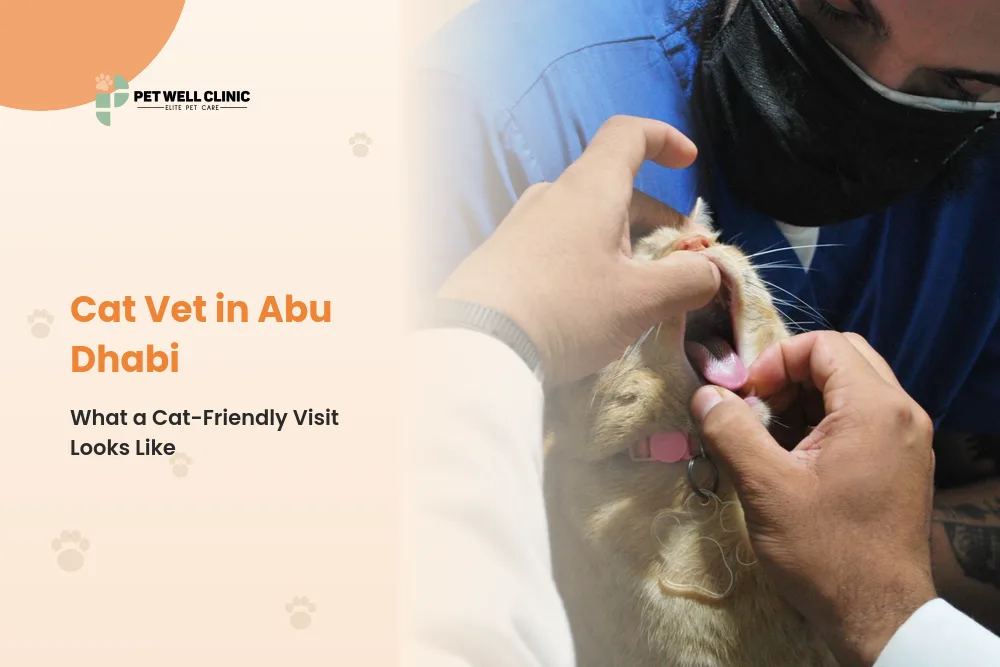
Many cat owners in Abu Dhabi put off vet visits for one simple reason: their cat hates the trip. The carrier comes out, the cat disappears under the bed, and by the time you reach the clinic everyone is stressed. The good news is that most of that stress can be reduced, both at home and in the consulting room. This guide explains what a cat-friendly visit looks like, how to prepare your cat, and how often your cat should see a vet.
Why cats need a different approach
Cats are not small dogs. They are territorial, they rely heavily on smell to feel safe, and they are very good at hiding pain and illness. A car journey, unfamiliar noises and the smell of other animals can all trigger fear. A frightened cat may hiss, freeze or try to hide, which makes a proper examination harder and can raise heart rate, breathing rate and even blood sugar readings.
That is why a good consultation for a cat is slower and quieter than one for a dog. The aim is to examine the cat thoroughly while keeping handling gentle and calm.
Before the visit: preparing your cat at home
The visit really starts days before you leave the house. A few small changes make a big difference:
- Leave the carrier out. If the carrier only appears on vet days, your cat learns to fear it. Keep it open in a room your cat uses, with a soft blanket and the occasional treat inside.
- Choose a carrier with a removable top. This lets the vet examine a nervous cat in the bottom half of the carrier instead of pulling it out.
- Use familiar smells. A blanket or T-shirt that smells of home helps your cat feel more secure.
- Plan food timing. A light meal is usually fine, but ask us if blood tests or sedation might be needed, as your cat may need to skip breakfast.
- Write down your questions. Note any changes in appetite, drinking, litter tray habits, weight or behavior. Our vet visit checklist covers what to bring.
On the way to the clinic
Carry the carrier with both arms, like a box, rather than swinging it by the handle. In the car, place it on the floor behind a seat or secure it with a seat belt so it does not slide. Cover it with a light towel so your cat can hide, and keep the air conditioning on during the hot months. Soft music or a quiet car helps more than talking to your cat constantly.
At the clinic: what a cat-friendly visit looks like
When you arrive, keep the carrier off the floor, on a chair or on your lap, and away from dogs where possible. Cats feel safer when they are higher up. Covering the carrier also reduces what your cat sees.
In the consulting room, we give your cat time to settle and come out on their own if they will. Many cats prefer to stay in the base of the carrier, and that is fine. We examine cats where they feel most comfortable, use gentle handling instead of restraint, and keep the room quiet. If a cat is very frightened, we may suggest splitting procedures across visits, or discuss calming medication for future visits.
What a full check covers
A routine wellness check for a cat usually includes:
- Weight and body condition, which are tracked over time because small losses matter in cats
- Heart and lung check with a stethoscope
- Eyes, ears, nose and mouth, including teeth and gums
- Skin and coat, looking for parasites, lumps or over-grooming
- Feeling the abdomen, kidneys, thyroid area and lymph nodes
- Joints and mobility, as arthritis is common and often missed in older cats
- A review of vaccines and parasite control
For cats over seven, we often recommend screening blood and urine tests. These can show early kidney, thyroid or diabetes changes long before your cat looks unwell. You can read more in our guide to the cat health checkup.
How often should your cat see a vet?
- Kittens: every three to four weeks during the first vaccine course. See our kitten vaccination plan.
- Adult cats (1 to 7 years): at least once a year, with boosters as advised. Our cat vaccination schedule explains the timing.
- Senior cats (over 7): every six months, because problems develop faster with age.
Indoor cats need regular checks too. They are protected from some risks, but they are still prone to dental disease, weight gain, urinary problems and kidney disease.
Signs your cat should see a vet sooner
Do not wait for the annual check if you notice any of the following. Our article on how to tell if your cat is sick goes into more detail.
- Not eating for more than 24 hours
- Straining in the litter tray, especially in male cats, which can be an emergency
- Breathing with an open mouth or fast breathing at rest
- Repeated vomiting or diarrhoea
- Hiding, lethargy or sudden changes in behavior
- Drinking much more than usual or weight loss
After the visit
When you get home, let your cat come out of the carrier in a quiet room. If you have more than one cat, the one who went to the clinic may smell different, and the others may hiss. Keeping them apart for a short time and rubbing both with the same towel can help. Offer a treat and leave the carrier out again so it does not only mean bad news.
Visiting Pet Well Clinic
Pet Well Clinic is in Al Dana Tower, Al Sa’adah, Abu Dhabi. We see cats for vaccinations, wellness checks, dental care, spay and neuter, diagnostics and more. If your cat is very nervous, tell us when you book and we will plan the visit around them.
Ready to book your cat in? Book an appointment online, call +971 50 104 8443, or send us a WhatsApp message.